
Dr. Marco V. Benavides Sánchez. Medmultilingua.com /
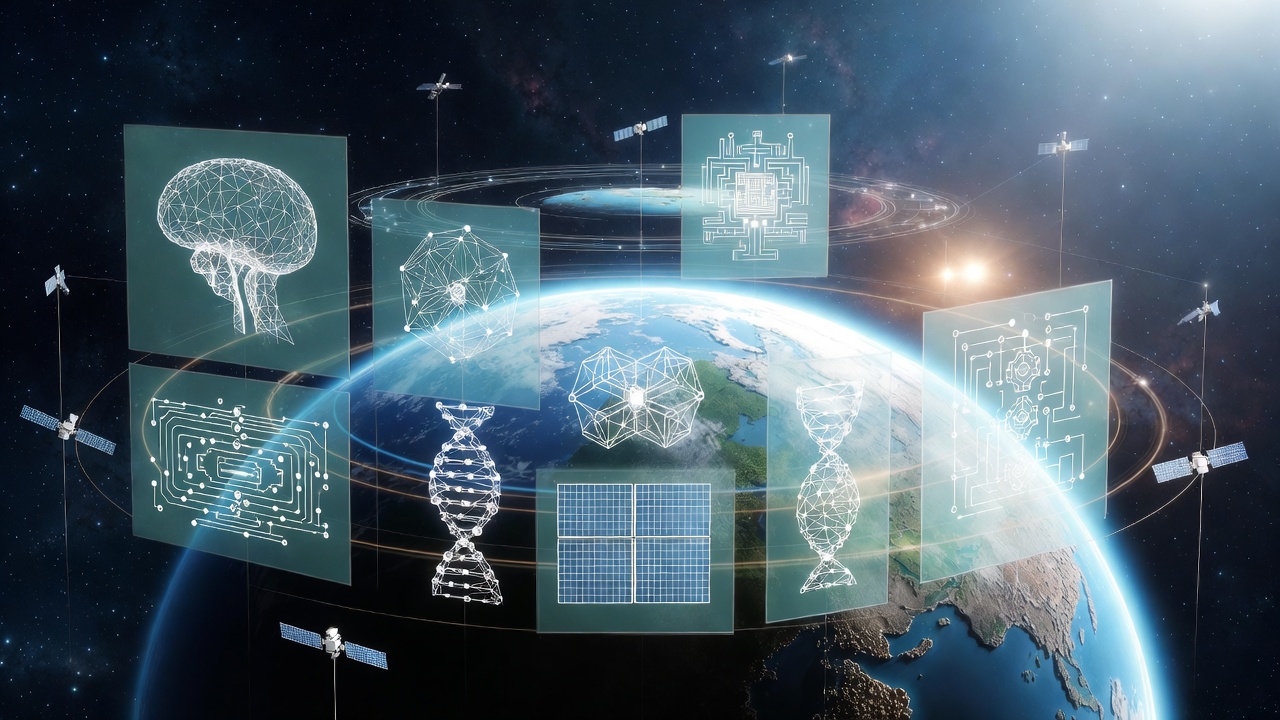
Technology is reshaping our world at unprecedented speed, but not all innovations carry equal weight. Some technologies have the power to redefine economies, national security, and global leadership.
A groundbreaking report from the Australian Strategic Policy Institute (ASPI) identifies 44 critical technologies shaping the next decade. This shift affects everything from healthcare to communications and energy.
ASPI analyzed millions of scientific publications from the past five years, identifying the most-cited research in each field. These technologies will determine economic competitiveness, military capabilities, and quality of life globally.
The Seven Domains of Innovation
The 44 technologies fall into seven major categories, each representing a different frontier of human capability.
1. Advanced Materials and Manufacturing (12 technologies)
This domain spans nanoscale materials engineered at the molecular level, 3D printing, and smart materials that change properties on demand. These technologies enable lighter aircraft, stronger buildings, more efficient batteries, and revolutionary medical devices. Critical mineral extraction and processing—essential for smartphones and electric vehicles—gives controlling nations enormous leverage over global supply chains.
2. Artificial Intelligence and Computing (11 technologies)
This digital backbone of modern civilization includes 5G/6G communications, AI algorithms, cybersecurity, and machine learning. Also, high-performance computing, advanced chip design, and natural language processing behind systems like ChatGPT.
These technologies power our phones, secure banking, enable autonomous vehicles, and will revolutionize healthcare diagnosis, education, and scientific research.
3. Energy and Environment (7 technologies)
These technologies are vital for combating climate change. The list includes electric batteries, photovoltaics, biofuels, and nuclear energy. Supercapacitors—devices enabling rapid energy charge and discharge—could revolutionize electric vehicles and grid storage.
4. Quantum Technologies (4 technologies)
Quantum technology harnesses subatomic particle properties to achieve impossible feats with conventional technology. Quantum computers could crack today’s encryption or discover new medicines in hours. Post-quantum cryptography will protect government secrets and personal banking in the quantum age.
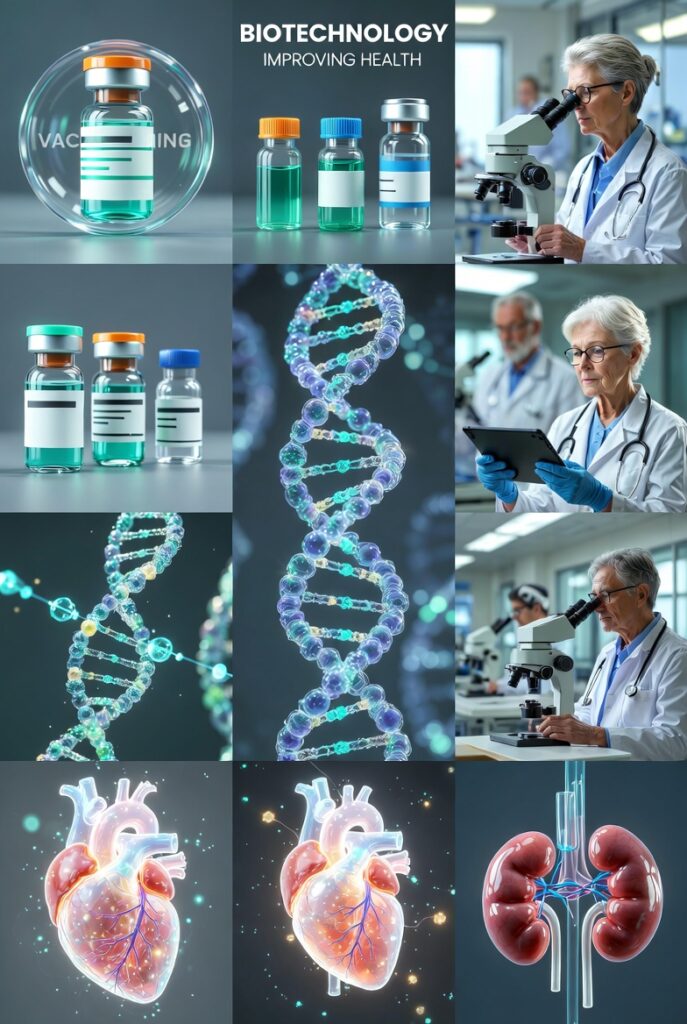
5. Biotechnology and Vaccines (3 technologies)
The COVID-19 pandemic demonstrated these technologies’ critical importance. This domain includes synthetic biology—engineering organisms for specific purposes—biological manufacturing, and vaccine development. These technologies will enable personalized medicine, lab-grown organs, and rapid pandemic responses.
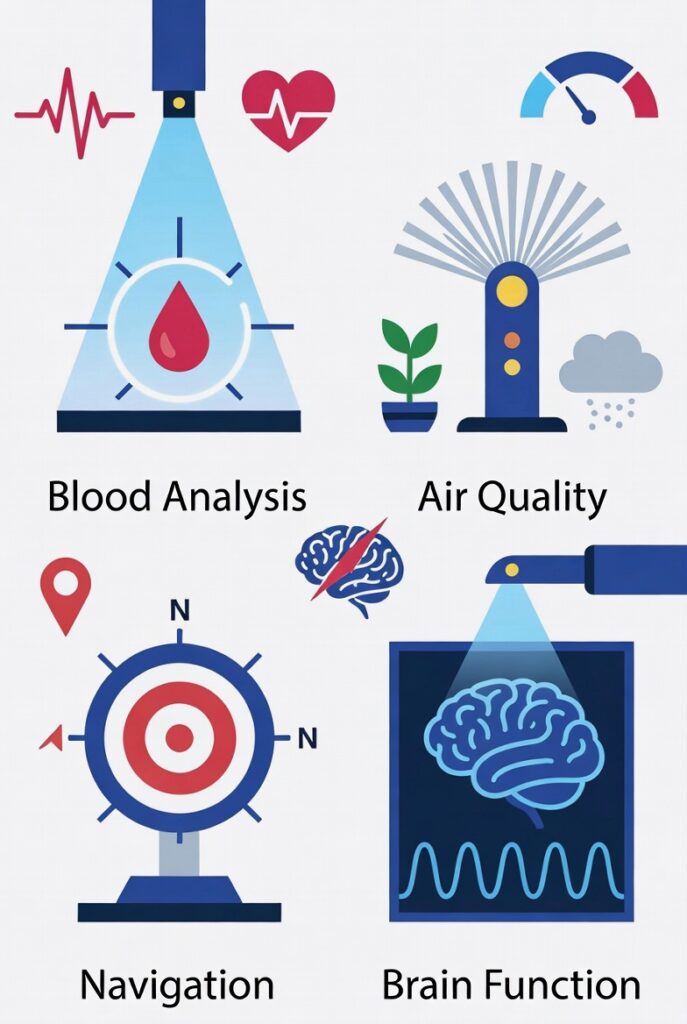
6. Sensing, Timing, and Navigation (1 technology)
Photonic sensors use light to detect and measure everything from disease markers in blood to trace chemicals in the atmosphere. These sensors are becoming smaller, cheaper, and more powerful, enabling new medical diagnostics, environmental monitoring, and autonomous systems.
7. Defense, Space, and Robotics (6 technologies)
This spans hypersonic aircraft engines, drone swarms, autonomous systems, and space launch capabilities. These technologies determine military capabilities, space resource access, and satellite-based services.
What This Means for the World
ASPI’s findings reveal a significant shift in the global technology landscape. For Latin America and other developing regions, this shift presents both challenges and opportunities. Understanding these technologies enables better decisions about education priorities, research investments, and international partnerships. It also highlights opportunities for regional collaboration and specialization in specific technological niches.

Looking Forward
These 44 technologies aren’t abstract concepts confined to laboratories—they’re already shaping our lives and will do so increasingly in the years ahead. From the phones in our pockets to the energy powering our cities, from the medicines treating our diseases to the security protecting our data, these innovations touch everyone.
Understanding them isn’t just for scientists and policymakers. In an increasingly technological world, basic technological literacy becomes essential for informed citizenship, career decisions, and understanding the forces shaping our collective future.
References:
Australian Strategic Policy Institute (ASPI). (2023). Critical Technology Tracker: The global race for future power. Retrieved from https://www.aspi.org.au/report/critical-technology-tracker
ASPI International Cyber Policy Centre. (2023). ASPI’s Critical Technology Tracker: Update and methodology. Australian Strategic Policy Institute.
Note: Here is a clean, publication-ready addition you can append to the article, followed by the APA-formatted reference consistent with Medmultilingua’s editorial style.
Added Note
Updated Scope of the ASPI Tracker
Since the publication of the original report referenced in this article, ASPI has expanded its Critical Technology Tracker. The initiative now monitors global research efforts across 74 critical technologies, offering policymakers, industry leaders, and international partners the most comprehensive and up-to-date view of the global race for strategic technological advantage. This expansion incorporates 10 additional technologies, identified through extensive expert consultation and systematic review of Australia’s national critical technology strategies, as well as those of its key allies. This broader scope reflects the rapidly evolving nature of strategic technologies and the growing complexity of global innovation competition.
Reference
Australian Strategic Policy Institute. (2024). ASPI’s Critical Technology Tracker: Expanded coverage of 74 technologies. ASPI International Cyber Policy Centre. ASPI’s Critical Technology Tracker: 2025 updates and 10 new technologies | The Strategist
About MedMultilingua: We translate complex scientific and technological developments into accessible information for global audiences, bridging language and knowledge barriers in an interconnected world.
#ArtificialIntelligence #Medicine #Surgery #Medmultilingua
Leave a Reply