-
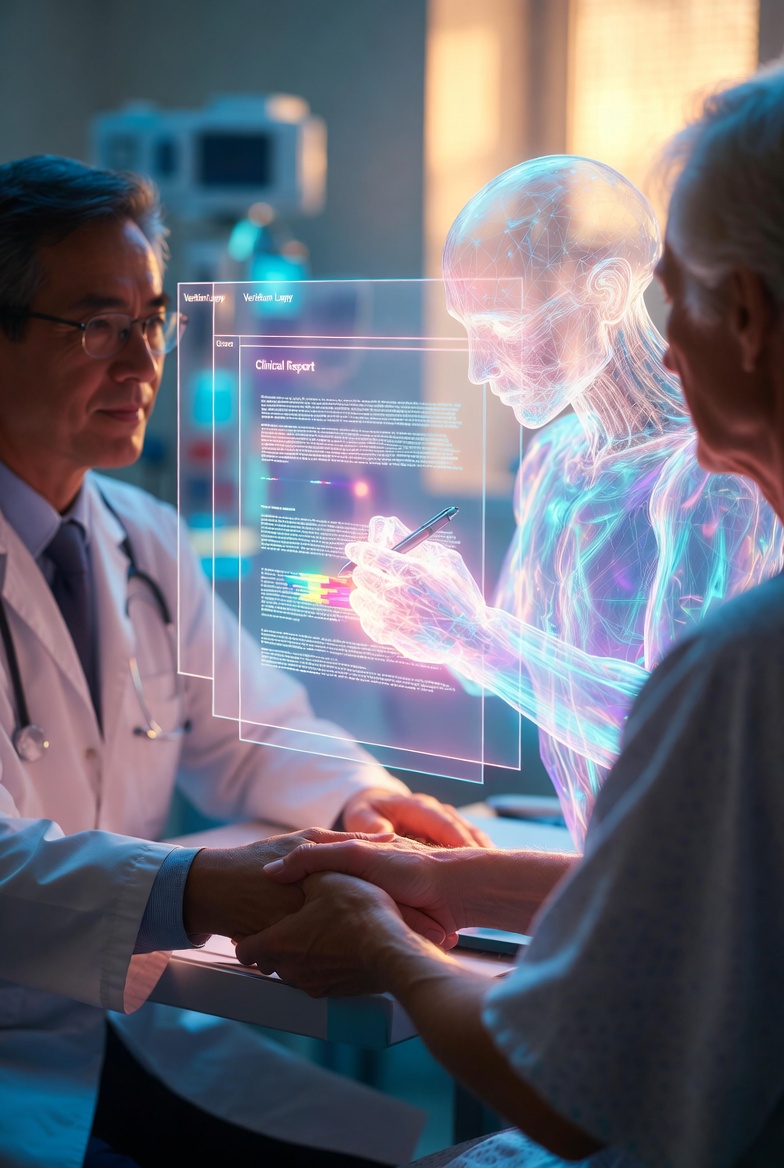
When Artificial Intelligence Writes Your Medical Visit Summary
Dr. Marco V. Benavides Sánchez – Medmultilingua.com/ Artificial intelligence systems are already drafting clinical notes in some hospitals. However, a new study raises a critical concern: the tools used to verify their quality may be failing exactly where it matters most—clinical safety. Imagine this scenario: your doctor finishes the consultation, shakes your hand, and as…
-
Artificial Intelligence and Multimodal Biomarkers: A New Frontier for Early Alzheimer’s Detection
Dr. Marco V. Benavides Sánchez. Medmultilingua.com / Alzheimer’s disease remains one of the most difficult neurodegenerative disorders to diagnose in its early stages. By the time clinical symptoms emerge—memory loss, disorientation, impaired judgment—the brain damage accumulated over years is already irreversible. In this context, the application of artificial intelligence (AI) to integrated sets of biological,…
-
The Invisible Intuition: Marcus Terentius Varro and the Germ Theory
By Dr. Marco V. Benavides Sánchez. Medmultilingua.com / In the history of science, there are intuitions that seem centuries ahead of their time. One of the most striking comes from Republican Rome. In 36 BC, the scholar Marcus Terentius Varro wrote a warning that sounds remarkably modern today: in swamps, he said, there could be…
-
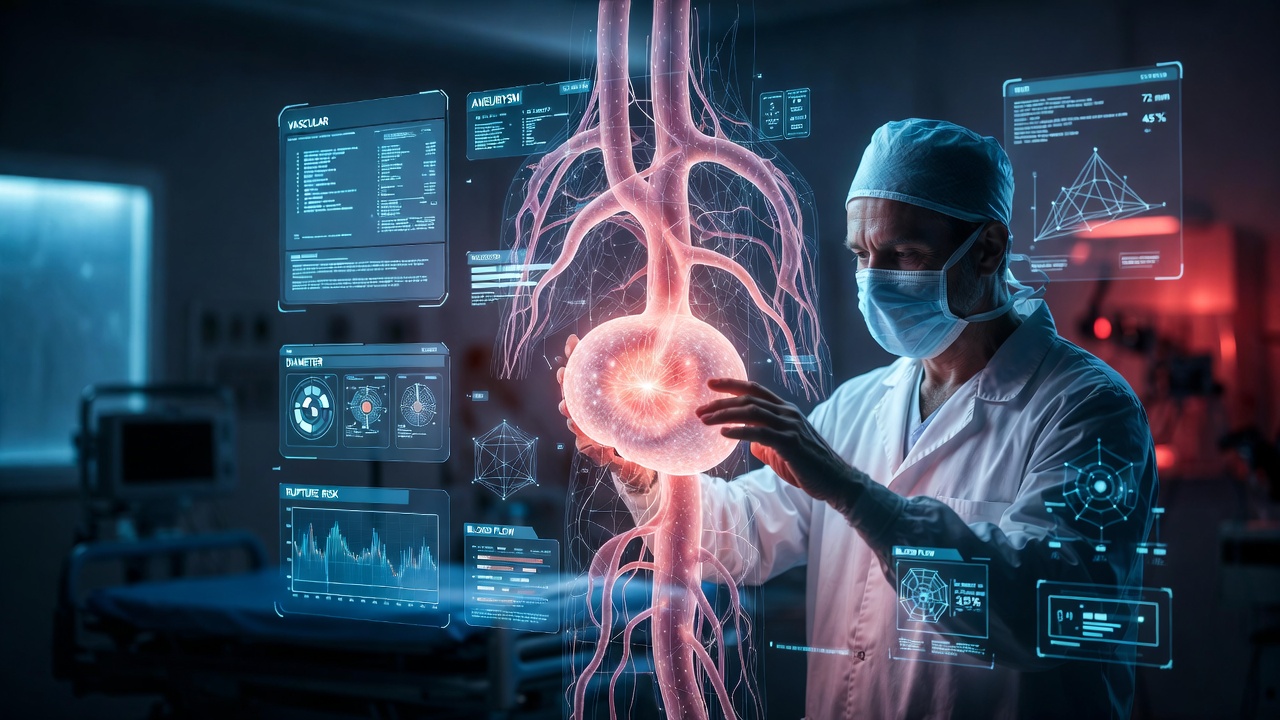
When Artificial Intelligence Learns to Read the Pulse of a Silent Threat
Dr. Marco V. Benavides Sánchez. Medmultilingua.com / Abdominal aortic aneurysms (AAA) are one of medicine’s quietest dangers. They grow slowly, often without symptoms, deep within the body’s largest artery. And when they rupture, the consequences are catastrophic. For decades, doctors have relied on a simple rule of thumb to decide when to intervene: measure the…
-

AI in Medicine Today: The Trends Reshaping Clinical Practice
Dr. Marco V. Benavides Sánchez. Medmultilingua.com / Artificial intelligence has moved from experimental promise to clinical infrastructure. In 2026, the most influential trends in medical AI converge on three pillars: clinical decision support, predictive and preventive care, and data-driven personalization. Together, they are redefining how health systems diagnose, treat, and manage disease. 1. AI as…
-

When Artificial Intelligence Doubts… and That’s Good for the Patient
Dr. Marco V. Benavides Sánchez. Medmultilingua.com / In medicine, getting it wrong simply isn’t an option. A misdiagnosis can alter the entire trajectory of someone’s life. That’s why, when we discuss artificial intelligence (AI) in healthcare, it’s not enough for a system to be merely “accurate” in its predictions: it must also recognise when it…

Artificial Intelligence in Medicine



This is how it all started…
Artificial intelligence (AI) began as a field of study at the Dartmouth conference in 1956, where a group of scientists, including John McCarthy, Marvin Minsky, Allen Newell, and Herbert A. Simon, proposed that “every aspect of learning or any other characteristic of intelligence can, in principle, be so precisely described that a machine can be made to simulate it.” This meeting was instrumental in establishing the foundations and goals of AI, defining the field as an academic discipline and laying the groundwork for decades of research. Since then, AI has evolved from simple theories and models to complex systems capable of performing tasks that, until recently, were considered exclusive to the human intellect.
Artificial intelligence is revolutionizing the fields of medicine, surgery, and biomedical sciences in extraordinary and diverse ways. In medicine, AI systems are improving diagnosis and personalizing treatment by analyzing large volumes of medical data and complex patterns beyond human capabilities, enabling more precise and efficient medicine. In surgery, AI-assisted robots are enabling more accurate, less invasive procedures with faster recovery times. Additionally, in biomedical sciences, AI is accelerating the research and development of new drugs by modeling biochemical simulations and predicting compound efficacy with unprecedented speed and accuracy. This impact of AI is not only transforming clinical and surgical methods, but also improving patient outcomes and optimizing resources in healthcare systems around the world.