
Dr. Marco V. Benavides Sánchez – Medmultilingua.com /
Picture an intensive care unit at three in the morning. Monitors blink in the half-dark, nurses move quietly down the corridor, and somewhere inside the hospital’s servers, an algorithm is watching. It doesn’t rest. It doesn’t get distracted. And it’s getting smarter by the hour.
For years, AI in medicine worked like a textbook: brilliant, comprehensive, written once, and permanently sealed. Systems were trained on millions of historical records, validated in controlled settings, and then deployed in hospitals where they sat unchanged — months, sometimes years — while the medical world kept moving around them.
That’s starting to change.
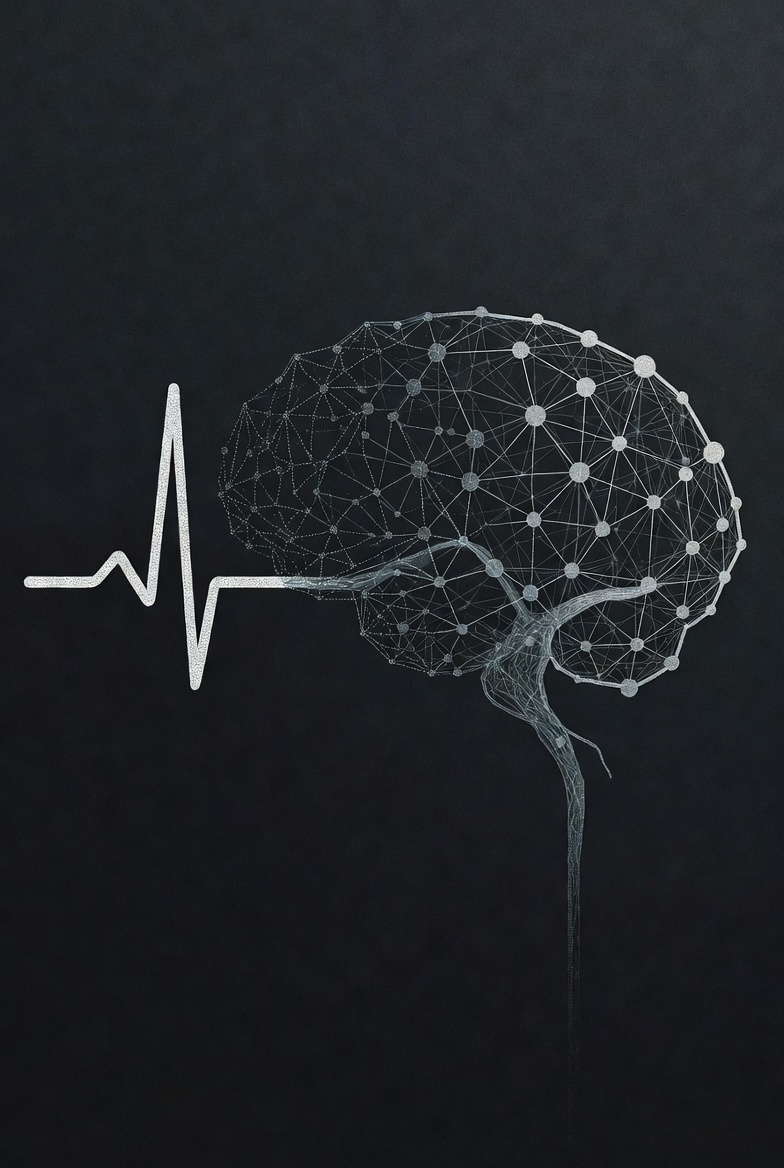
Researchers have developed a new class of systems called real-time adaptive clinical AI. Unlike their static predecessors, these models don’t coast after installation. They update continuously, pulling in fresh data: the vital signs a sensor just recorded, the lab result that came back ten minutes ago, the clinical note a physician finished typing half an hour ago. They’re digital organisms that evolve at the pace of reality itself.
The practical implications are hard to overstate. Take sepsis — the runaway infection that shuts down organs and kills millions every year. By the time symptoms become visible to the human eye, the clock has often been running against the patient for hours. An adaptive system could spot the storm before it breaks, reading invisible signals in the tide of data that flows continuously from a patient’s body.
But the double-edged nature of this technology is inseparable from its promise.
The first risk has a technical name: “model drift“. Over time, any algorithm can quietly lose its grip on the reality it was built to describe. Patients change. Diseases mutate. Protocols get updated. A system that’s constantly learning can go off course in ways that are subtle and hard to catch — like a navigator who adjusts course by one degree each day until, weeks later, the ship is headed toward the wrong continent entirely.
The second risk is older and darker: bias. If a system learns from data that reflects decades of medical inequality — undertreated populations, delayed diagnoses in certain communities, uneven care — it won’t correct those patterns. It will amplify them. AI learns what it sees, and medicine hasn’t always looked at everyone the same way.
That’s why the promise of adaptive AI comes with an obligation: permanent vigilance. Systems that change by the hour can’t be audited once a year. They require oversight mechanisms that are just as dynamic as the systems themselves — capable of catching the moment a model starts learning the wrong lessons.
Regulatory agencies such as the Food and Drug Administration, are grappling with a genuinely novel philosophical puzzle: how do you certify something that, by design, won’t be the same tomorrow as it is today? The frameworks taking shape demand radical transparency — the ability to reconstruct, step by step, exactly why a system made a particular call at a particular moment.
For Latin America, the picture is much more complicated. These systems could help close enormous gaps: bringing specialist-level diagnosis to regions with no specialists, stretching resources in overwhelmed hospitals, catching epidemic outbreaks before they spin out of control. But even the most sophisticated technology in the world doesn’t work on fragile infrastructure or on data that’s fragmented, inconsistent, and disconnected.
The question isn’t whether AI will learn to practice medicine alongside humans. It already is. The question is whether we can learn — just as quickly — to supervise it, correct it, and demand that it serves everyone, not just the populations it already knows well.
The doctor who never sleeps has an extraordinary gift. But it still needs someone to teach it what accountability means.
Reference:
– Santra, S., Kukreja, P., Saxena, K., Gandhi, S., & Singh, O. V. (2024). Navigating regulatory and policy challenges for AI-enabled combination devices. Frontiers in Medical Technology, 6. https://doi.org/10.3389/fmedt.2024.1473350)
Recommended hashtags:
#DigitalHealth2026, #ClinicalDecisionSupport, #MedTechPolicy, #AIinHealthcare, #Medmultilingua.
© Medmultilingua 2026 — Science accessible to everyone, worldwide.
Leave a Reply