

Dr. Marco V. Benavides Sánchez.
New tools are automating the creation of artificial intelligence models, allowing more hospitals to access advanced diagnostics and predictions without needing programming experts
In any hospital, a physician reviews dozens of clinical studies every day: blood tests, X-rays, medication histories. Hidden within those data could be the key to detecting a disease early or predicting a serious complication. But finding those patterns requires more than medical experience — it requires the power of artificial intelligence. And until recently, building these AI systems was a luxury reserved for major research centers with teams of specialists in programming and advanced statistics.
That is now changing. A technology called Automated Machine Learning — or simply AutoML — promises to bring artificial intelligence within reach of any medical team, whether or not they have tech experts. A recent international study analyzed 244 papers published between 2016 and 2025 to understand how this tool is transforming medicine and how close we are to seeing it operate in real hospital settings.
Accessible AI: When Machines Learn on Their Own
Traditionally, developing an AI model was like constructing a building from scratch: every component had to be designed, hundreds of combinations tested, and thousands of parameters tuned by hand. A process that could take months, even for experienced teams.
AutoML changes the rules of the game. “It’s like having an assistant that automatically tests different designs until it finds the one that works best,” explains the study led by researchers in Brazil and published in Artificial Intelligence in Medicine. These platforms do much of the heavy lifting, allowing physicians and researchers to focus on what really matters: interpreting the results and applying them to their patients.
Examples of Popular AutoML Platforms
(You don’t need to be a programmer to use them)
- Google Cloud AutoML (Vision, Tabular, NLP)
- Azure AutoML
- Amazon SageMaker Autopilot
- H2O AutoML (widely used in healthcare)
- Auto-sklearn (open source)
- TPOT (open source, uses evolutionary algorithms)
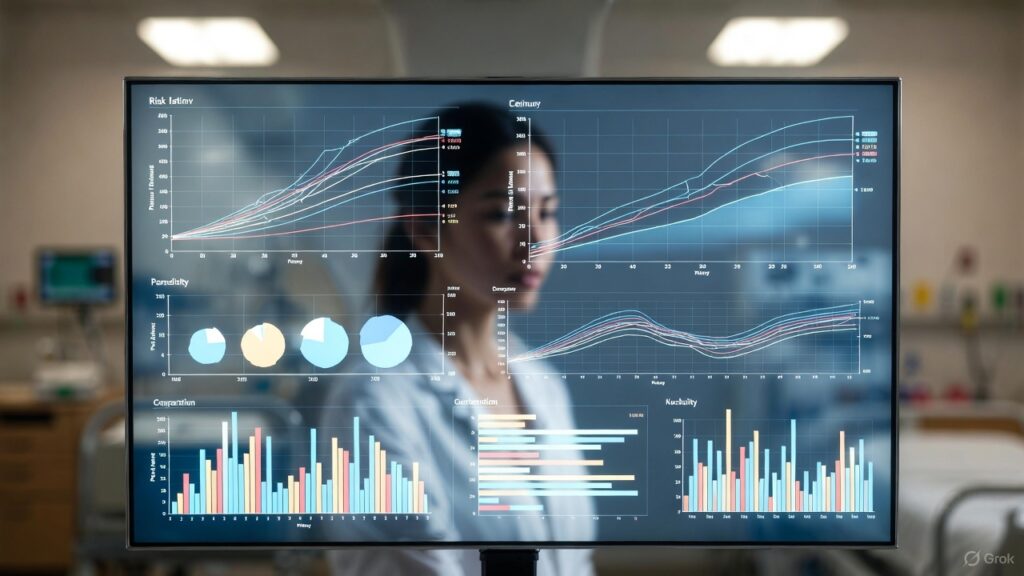
From the Lab to the Emergency Room
What is this technology being used for? The analysis reveals two dominant applications:
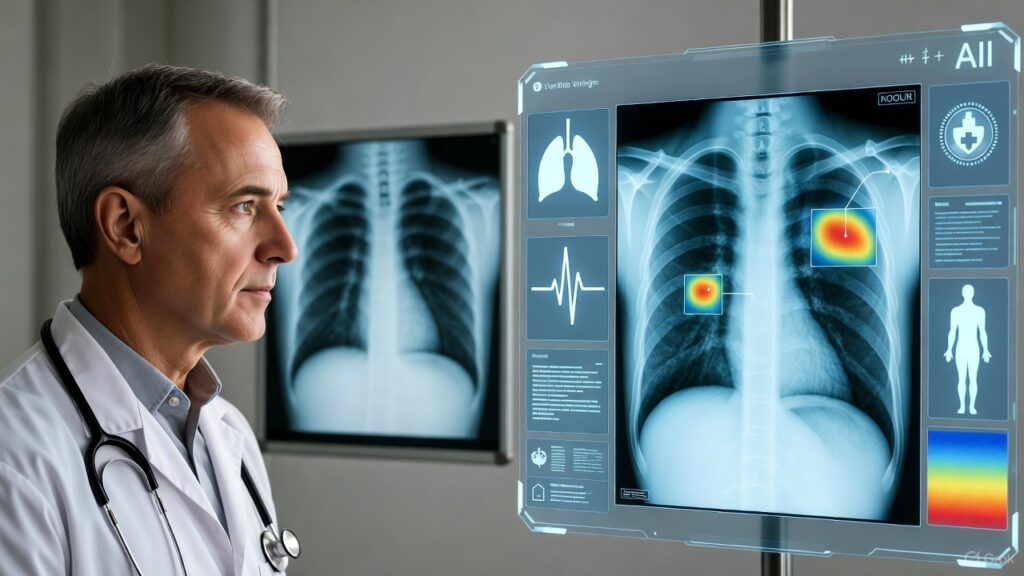
First, diagnosing disease. Systems that can detect early signs of diabetes from lab tests, identify pneumonia in chest X-rays, or recognize cancer types in biopsies. Cases where speed and accuracy can mean the difference between life and death.
Second, predicting a patient’s future. Models that estimate the risk of deterioration, forecast postoperative complications, or anticipate how well a patient will respond to certain treatments. Crucial information for making well-informed clinical decisions.
The data feeding these systems come mainly from two sources: electronic health records — with information on vital signs, medications, and medical history — and medical imaging such as X-rays, CT scans, and MRIs. This shows that AutoML is not just for futuristic projects: it works with the information hospitals already generate every day.
Not Everything Is Automatic: Challenges That Remain
Despite its advantages, AutoML is not a magic wand. The study identified key obstacles that still require specialized human intervention.
Data preparation remains the Achilles’ heel. Medical records are a complicated mosaic: missing values, entry errors, incompatible formats across systems. The old computing proverb “garbage in, garbage out” applies perfectly here. Even with AutoML, cleaning and organizing the data requires time and expertise.
When researchers choose traditional approaches instead of full AutoML, the biggest headache is selecting the right model from hundreds of possible options. A deep neural network? A random forest? A support vector machine? Every decision involves weeks of testing.
Perhaps the most critical challenge is interpretability. Many AI models function as black boxes: they produce a diagnosis or prediction but do not explain the reasoning behind it. In medicine, this is unacceptable. A physician needs to understand why the system suggests a particular diagnosis before acting on it. A patient has the right to know how decisions about their health were made.
According to the analysis, only 30% of the reviewed studies included tools to explain their models’ decisions. However, there are promising signs: this number began to rise significantly in 2024, indicating that the scientific community is taking the issue seriously.
The Horizon: AI for Every Hospital
The promise of AutoML is clear: to democratize access to technologies that until now were reserved for institutions with large budgets and multidisciplinary teams. A regional hospital could develop systems to detect complications in diabetic patients. A rural clinic could predict heart-attack risks using local data.
But to make this vision a reality, key tasks remain: building more transparent models that explain their decisions, establishing stricter quality standards for medical data, and conducting rigorous clinical evaluations to demonstrate that these systems truly improve care.
If medicine can overcome these challenges, AutoML could become an everyday ally for physicians in clinics, hospitals, and emergency rooms around the world — helping them make faster, more accurate, and more informed decisions. The AI that programs itself could finally be the one that reaches everyone.
Reference
- Castro, G. A., Barioto, L. G., Cao, Y. H., Silva, R. M., Caseli, H. M., Machado-Neto, J. A., Cerri, R., Villavicencio, A., & Almeida, T. A. (2025). Automated Machine Learning in medical research: A systematic literature mapping study. Artificial Intelligence in Medicine, 103302. https://doi.org/10.1016/j.artmed.2025.103302
#ArtificialIntelligence #Medicine #Surgery #Medmultilingua
Leave a Reply