Today in Medmultilingua
Abstract
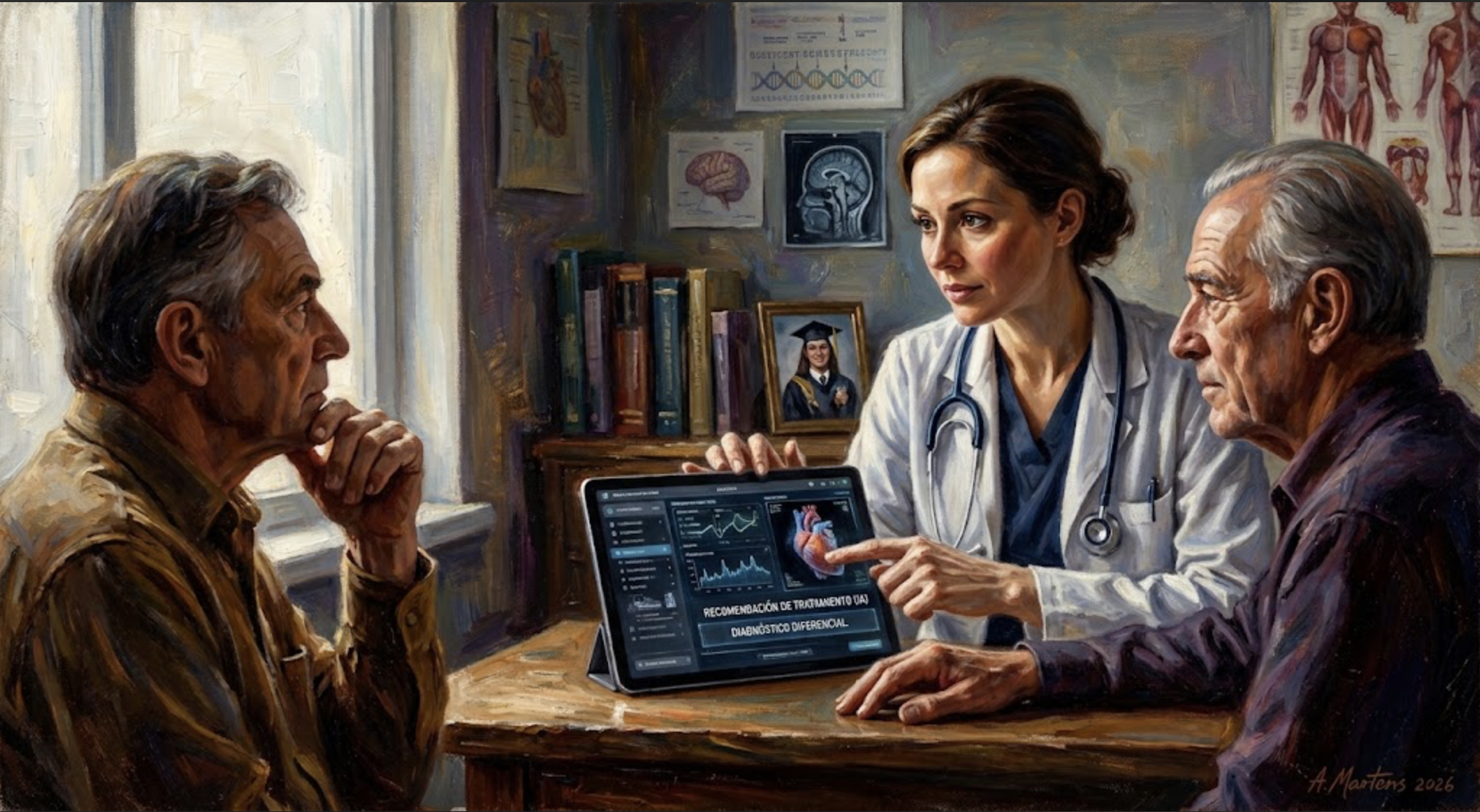
October 2026 has been one of the most intense months for artificial intelligence as applied to medicine. A Microsoft system that simulates a panel of physicians outperformed general practitioners in complex clinical cases; the first major study on the real-world use of AI by nearly a million clinicians revealed that doctors consult it more for treatment than for diagnosis; and new models have succeeded in detecting hidden diseases in CT scans, predicting cancer survival based on a photograph of a patient’s face, and identifying the gene responsible for hereditary retinal diseases. Meanwhile, the FDA is moving toward specific regulation for generative AI, and the pharmaceutical industry continues to invest billions in drugs designed by algorithms—drugs that have yet to receive full approval. This article reviews these advancements, alongside evidence that warrants caution, and poses a central question: are we prepared to oversee a technology that is already learning faster than we are?
Keywords: Artificial intelligence; medicine; clinical diagnosis; MAI-DxO; OpenEvidence; computed tomography; ophthalmology; FDA regulation; drug discovery; automation bias.